


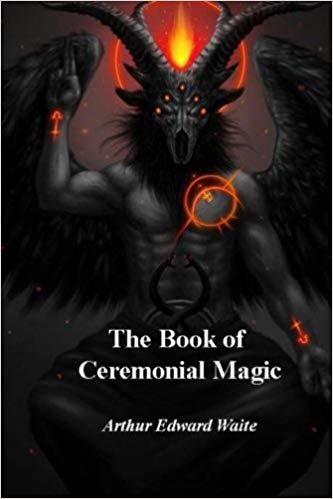
The Book of Ceremonial Magic
The Book of Ceremonial Magic, originally published by Arthur Edward Waite in 1911 as The Book of Black Magic and of Pacts, remains one of the most significant and controversial grimoires of the modern era. Unlike earlier texts that often presented fragmented or obscure rituals, Waite’s work sought to compile, systematize, and critically analyze the vast scope of Western ceremonial magic, particularly focusing on the practices of evocation and pact-making. While it documents the rituals of summoning spiritual entities—from demonic forces to planetary intelligences—it does so not as a practical guide but as a scholarly survey, offering a meticulously researched map of the forbidden territories of the occult.
Waite’s compilation draws extensively from key historical sources, including the Key of Solomon, the Lemegeton (Lesser Key of Solomon), and medieval grimoires, presenting detailed descriptions of rituals, seals, pentacles, and instruments such as swords, wands, and circles of protection. Yet, his intention was never to endorse these practices. As a Christian mystic and member of the Hermetic Order of the Golden Dawn, Waite framed ceremonial magic as the „evil side” of occultism, contrasting it with the „divine side” of mysticism and communion with God. He consistently warned of the spiritual and psychological dangers of engaging with these forces without pure intention and rigorous preparation, viewing such practices as a perilous diversion from true spiritual ascent.
Despite its critical stance, the book’s impact on Western esotericism has been profound. It became an essential resource for twentieth-century occultists, including figures like Aleister Crowley, who both drew upon and reacted against Waite’s interpretations. Its detailed diagrams of sigils, hierarchies of spirits, and ceremonial protocols provided a structured foundation for later magical societies and practitioners. Today, it serves as a vital historical document, offering insight into the Renaissance and medieval worldview where magic, science, and religion intertwined. It reveals humanity’s enduring desire to harness unseen forces, confront the unknown, and seek power beyond the mundane.
Ultimately, The Book of Ceremonial Magic is a work of dual nature: it is both a treasury of arcane knowledge and a moral cautionary tale. It preserves the rituals that have fueled the Western magical imagination while arguing for their transcendence in favor of a purer, mystical path. This tension between fascination and warning ensures its enduring relevance, making it indispensable for historians, occult scholars, and anyone exploring the shadows of ceremonial tradition.… read more
 DE TOATE PENTRU TOŢI ŞI MAI MULT...
Lasă un comentariu